
If you have ever wondered what is actually happening inside your unit when you switch it on and feel that cool air, you are not alone. It is one of the most common questions we get when visiting homes and small businesses around Leeds. Whether you are speaking to an air conditioning engineer Leeds or just researching your options, understanding the basics helps you make better decisions about installation and maintenance.
In this guide, we will break it all down in plain English. No complicated jargon, just a clear explanation of how air conditioning works and what it means for your home or workplace.
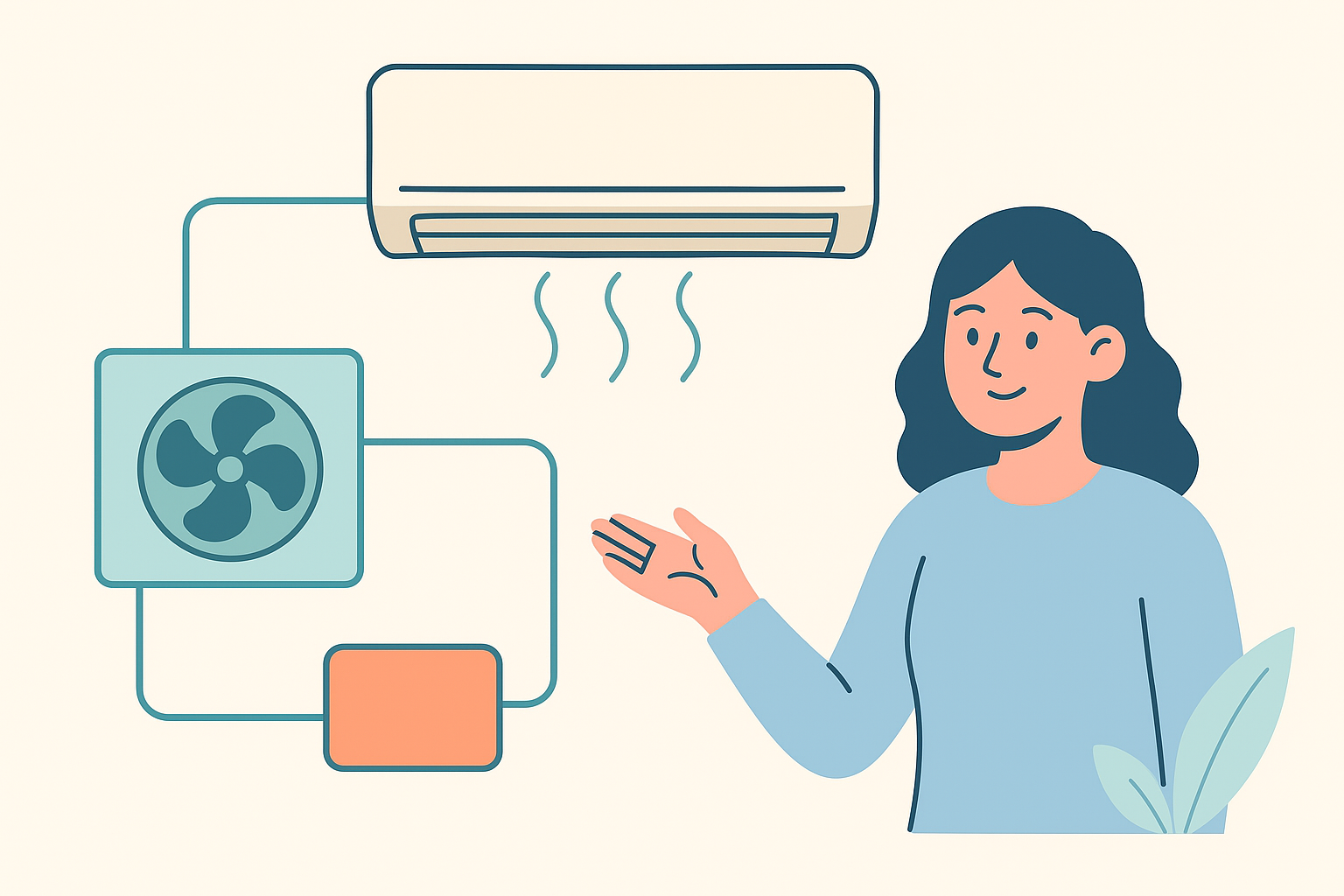
The basic principles: heat transfer and the refrigeration cycle
At its simplest, air conditioning is all about moving heat from one place to another. It does not “create” cold air. Instead, it takes heat from inside your property and moves it outside.
Think of it like this. The air in your living room or shop contains heat. Your air conditioning system pulls that warm air in, removes the heat using a special refrigerant fluid and then sends the cooled air back into the room.
This process is called the refrigeration cycle. It relies on a refrigerant, which is a chemical that changes very easily between a liquid and a gas. As it changes state, it absorbs and releases heat. That is the clever bit.
In simple terms:
- The system draws in warm indoor air
- The refrigerant absorbs the heat from that air
- The heat is carried outside and released
- Cooled air is blown back inside
That cycle repeats continuously until the room reaches the temperature you have set on the controller.
Key components of an air conditioning system
Although there are different designs, most modern systems across homes in Horsforth, Rodley, Rawdon and Cookridge share the same core parts.
The main components are:
- Evaporator coil – absorbs heat from the indoor air
- Compressor – pumps the refrigerant around the system and increases its pressure
- Condenser coil – releases the collected heat outside
- Expansion valve – controls the flow of refrigerant and reduces its pressure so the cycle can start again
- Fans – move air across the coils and around the room
In most domestic systems, you will have an indoor unit mounted high on a wall and an outdoor unit positioned on the ground or fixed to brackets. We often advise customers in tighter terraces around Leeds to think carefully about outdoor unit placement so it is accessible for servicing and not boxed in.
Types of air conditioning systems for homes
If you are considering air con for the first time, you might be surprised at the different options available.
Wall-mounted split systems
These are the most common for houses and small offices. They have one indoor unit connected to one outdoor unit. They are neat, efficient and suitable for single rooms or open plan areas.
Multi-split systems
With this setup, several indoor units connect to one outdoor unit. It is ideal if you want to cool multiple bedrooms or a shop floor and back office without cluttering the exterior of the building.
Ducted systems
More common in larger properties, ducted air conditioning hides most of the equipment in the loft or ceiling space. Air is distributed through ducts and vents for a very clean finish.
If you are unsure which would suit your property, it helps to look at real examples. We recently worked on a small café near Horsforth where a multi-split system made far more sense than separate units because of limited outdoor space.
For a closer look at the practical benefits, you can also see our article on the benefits of installing an air conditioner, which covers comfort, air quality and productivity.
How efficiency and maintenance impact performance
A well installed system should be quiet, responsive and cost effective to run. However, efficiency depends on more than just the model you choose.
Correct sizing is crucial. A unit that is too small will struggle on hot days. One that is too large may switch on and off too frequently, which wastes energy and puts extra strain on components.
Maintenance is just as important. Dirty filters restrict airflow. Blocked condensers reduce heat release. Low refrigerant levels affect cooling performance. These are issues we regularly see when servicing units that have been left for years without attention.
For small business owners in kitchens or busy retail spaces around Leeds, build-up of dust and grease can happen faster than you might expect. A regular service keeps everything clean, safe and running efficiently.
When to call a professional air conditioning engineer
There are a few clear signs it is time to call in a professional.
- Your system is blowing warm air instead of cool
- You notice unusual noises or vibrations
- Water is leaking from the indoor unit
- Your energy bills suddenly increase without obvious reason
Even if everything seems fine, an annual check is sensible. It keeps the system compliant, protects your warranty and helps avoid breakdowns during the hottest week of the year, which is usually when we get the most emergency calls.
If you live in Horsforth, Rodley, Rawdon, Cookridge or anywhere across Leeds and are thinking about installing or servicing a system, professional advice makes a real difference. At Horsforth Heating Solutions, we take the time to assess your space properly and explain your options clearly.
Contact us today to arrange your air conditioning service or get a quote for installation.